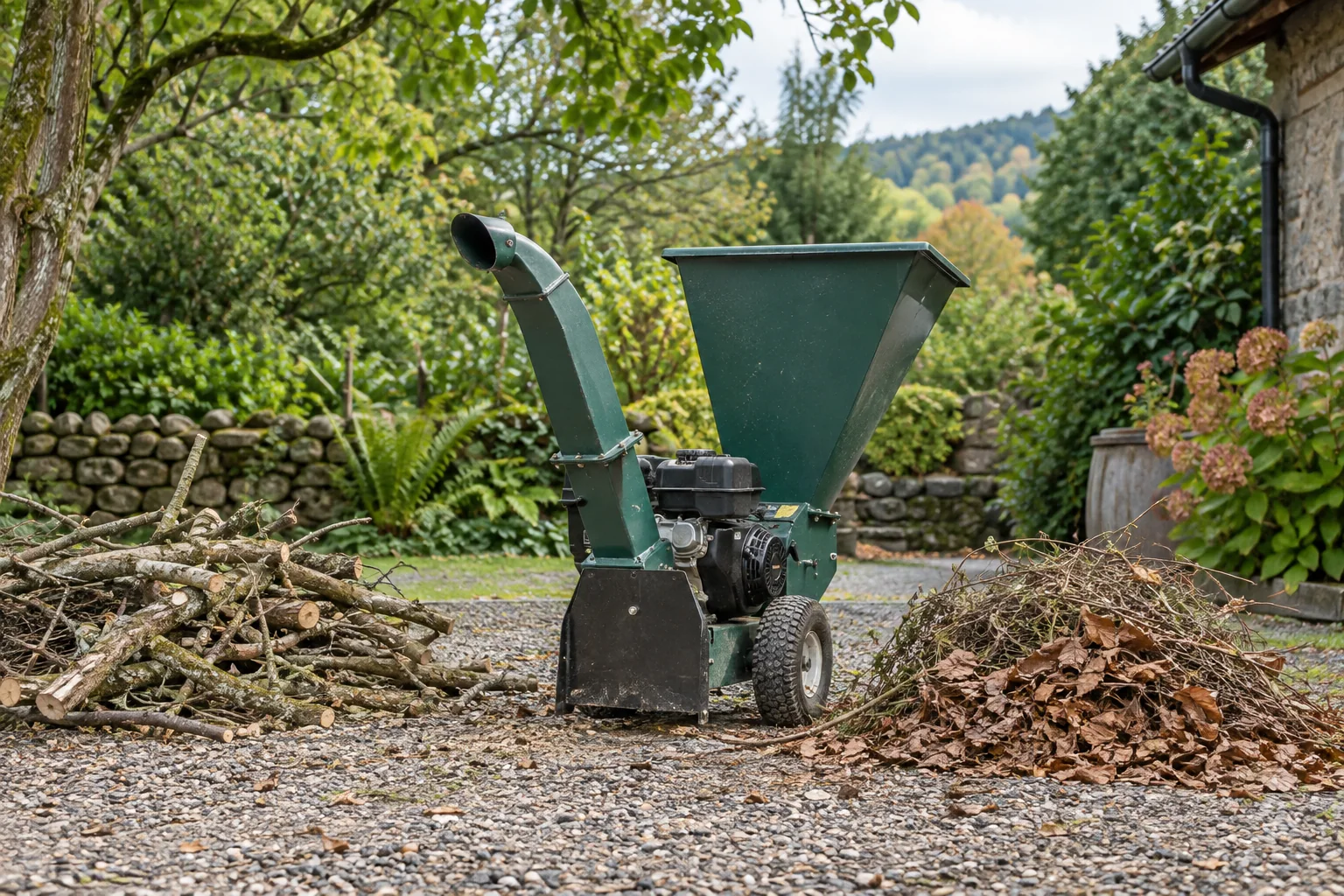
Our picks at a glance
| Rank | Machine or approach | Best fit | Manufacturer-rated branch capacity | Feed and material distinction | Price checked September 23, 2026 | Main limitation |
|---|---|---|---|---|---|---|
| 1 | Champion 200946 | Recurring mixed yard waste | Up to 3 in. | Gravity-feed chipper chute plus separate leaf/soft-debris shredder chute | No direct price displayed; manufacturer says "Find Local" | Maximum diameter does not establish sustained throughput |
| 2 | WEN 41119 | Lowest-cost small-yard purchase | Up to 1.75 in. | 15-amp corded electric; 12-gal. collection bag | $92.52 on the manufacturer page; verify at checkout | Small branches and proximity to a suitable outlet |
| 3 | DR PREMIER 375 | Repeated branch-heavy work without a tractor | Up to 3.75 in. | Dedicated, manufacturer-described self-feeding gas chipper; no separate leaf-shredder hopper listed | Page simultaneously displayed $1,699.99 "special" and $1,899.99 "sale"; verify checkout | 164 lb. and no dedicated leaf-shredding chute |
| 4 | Patriot CSV-2515 | Leaf-heavy yard work with electric power | Up to 2.5 in. | 120V electric chipper with separate leaf/vegetation hopper | $1,495 new direct from manufacturer | High cost for the size; requires a suitable circuit and cord |
| 5 | WoodMaxx WM-8H | Frequent wooded-property work with a compatible tractor | Up to 8 in. at sufficient PTO power | PTO-driven with adjustable hydraulic infeed rollers | $4,095 direct from manufacturer | Tractor compatibility, hydraulic-fluid setup, major storage and handling demands |
Specifications and listed prices come from the respective Champion, WEN, DR, Patriot, and WoodMaxx pages. Prices are in US dollars before any location-dependent tax, delivery, or extras; promotions can change. There is no subscription or renewal price for these machines, but blades, fuel or electricity, oil, repairs, and storage are ongoing costs.
Which option fits your job?
| Your recurring workload | Our choice | Why |
|---|---|---|
| Twigs and modest branches near an outlet | WEN 41119 | Low entry cost and a compact electric format; 1.75 in. is the stated maximum, not an ideal everyday target. |
| Leaves, garden debris, and branches in one machine | Champion 200946 | Two purpose-specific inlets and a 3-in. branch rating. |
| Leaves and brush, with a strong preference for electric power | Patriot CSV-2515 | Separate wide hopper and 2.5-in. branch inlet, at a steep price premium. |
| Primarily woody branches, regularly | DR PREMIER 375 | Dedicated 3.75-in.-rated branch chipper with self-feeding design. |
| Regular brush clearing on a wooded tract with a suitable tractor | WoodMaxx WM-8H | Adjustable hydraulic rollers; check PTO horsepower against actual wood size. |
| One storm cleanup or occasional branches beyond homeowner-machine capacity | Local brush-chipper rental or tree-service quote | Pay for the job and operator needs instead of storing and maintaining a large machine. |
| Mostly grass and loose leaves, little wood | No wood chipper | A dedicated leaf mulcher, mower, compost system, or municipal collection may fit better. |
How we researched and ranked these choices
We compared published specifications for five machines. We did not physically test them, time loads of branches, measure noise, verify clog rates, or establish how often each machine can process its advertised maximum diameter. Manufacturer pages and manuals support model-specific specifications; the NIOSH wood-chipper guidance supports safety guidance, and United Rentals' equipment listing establishes a rental alternative. Manufacturer reviews and sales language were not treated as independent performance tests.
The ranking is our editorial opinion, not a numerical score. We prioritized: (1) matching the actual mix of wood, leaves, and brush; (2) plausible working capacity rather than the largest stated opening; (3) feed behavior and preparation time; (4) power and mobility; (5) total ownership cost, parts, and maintenance; and (6) whether rental or hired removal is the sounder fit. A specialist machine can rank lower overall while being the best choice for its stated use case.
1. Champion 200946 - our overall choice for mixed yard waste
The Champion 200946 is the best single purchase here for a homeowner who repeatedly handles both branches and softer yard waste. Champion rates its chipper chute for branches up to 3 inches and its separate shredder inlet for leaves, shrubbery, and other soft material up to 1/2 inch in diameter. It has a 224cc gas engine, gravity feed, a 2-bushel bag, a rear clean-out port, and a two-year limited warranty. The rating describes what fits the machine; it does not document a measured hourly output on hard or forked wood.
Key facts
- Power: 224cc four-stroke gasoline engine.
- Rated branch diameter: Up to 3 in. through the chipper chute.
- Other material: Leaf, shrubbery, and soft debris up to 1/2 in. through a separate shredder chute.
- Feed: Gravity; no powered infeed rollers.
- Weight: 135.6 lb.; not towable according to the product specifications.
- Warranty: Two-year limited warranty.
- Price: Official page directs buyers to local sellers; no direct manufacturer price verified.
Why it ranks here: The two inlets make the Champion 200946 useful for a broader debris mix than a dedicated branch chipper. This is an inference from its design and listed capacities, not a claim that it processes every material faster. Best for: A property owner with recurring seasonal pruning and leaves. Limitations: Recoil starting, fuel and engine service, manual branch handling, and no verified local price or independent throughput benchmark. Verdict: Choose it when you genuinely need both functions; choose a dedicated chipper when nearly all your material is wood.
2. WEN 41119 - our low-cost choice for light pruning
The WEN 41119 is the lowest-cost entry point among the listed purchases for small, occasional debris. WEN lists a 15-amp motor, a maximum 1.75-inch branch diameter, two cutting blades, a supplied push stick, a 12-gallon bag, and a two-year warranty. Its modest listed purchase price is a main reason to consider it. None of those specifications establishes that thick hardwood can be fed continuously at the maximum diameter.
Key facts
- Power: 15-amp corded electric.
- Rated branch diameter: Up to 1.75 in.
- Other material: WEN lists clippings, twigs, and foliage, but provides no separate leaf-shredder hopper in this model's product description.
- Feed: Manual feed with included push stick; no powered infeed rollers listed.
- Collection: 12-gal. bag.
- Warranty: Two years.
- Price: $92.52 direct at the listed price check; verify current checkout price.
Why it ranks here: The WEN 41119 suits small piles where purchase cost and easy storage matter more than sustained production. Best for: Infrequent pruning near a suitable outdoor electrical supply. Limitations: Cord reach, small rated capacity, and no evidence that its claimed maximum translates to comfortable continuous work. Check the model manual for circuit, extension-cord, and permitted-material instructions before use. Verdict: Buy for modest twigs and branches; step up or rent when piles are large or branches regularly approach 2 inches.
3. DR PREMIER 375 - our choice for repeated branch work
The DR PREMIER 375 makes more sense than a general chipper-shredder when the work is mostly woody branches. DR calls it a dedicated self-feeding chipper, rates it for hardwood branches up to 3.75 inches, and lists a 9.2 HP, 301cc gas engine. The standard machine and engine warranties are two years for residential use but only 90 days for commercial use. "Self-feeding" is DR's description; this is not an assertion that it has hydraulic rollers like the WoodMaxx.
Key facts
- Power: 9.2 HP, 301cc gasoline engine; manual start.
- Rated branch diameter: Up to 3.75 in., described by DR for hardwood.
- Other material: Dedicated chipper; no separate leaf-shredding chute listed.
- Feed: Manufacturer-described self-feeding design; no hydraulic rollers listed.
- Weight: 164 lb.; optional property-towing hitch, purchased separately.
- Warranty: Two years residential or 90 days commercial for engine and machine.
- Price: The manufacturer's page displayed both a $1,699.99 special and a $1,899.99 sale at the listed price check. Confirm the actual checkout total and offer eligibility.
Why it ranks here: It avoids paying for a separate leaf-shredding function if branches dominate, while offering a higher stated branch limit than the Champion. We cannot infer a measured productivity advantage from diameter or engine rating alone. Best for: Frequent pruning on a property without a PTO tractor. Limitations: Substantial mass, gas maintenance, no leaf hopper, and conflicting promotional prices on the official page. Verdict: Choose it for repeated woody piles; rent for a one-time job or look at a dual-inlet model if leaves are equally important.
4. Patriot CSV-2515 - our electric choice for leaf-heavy work
The Patriot CSV-2515 fits someone who processes plenty of leaves and garden material but wants a dedicated electric machine rather than a gas engine. Patriot lists a 120V electric chipper-shredder, a wide leaf hopper, a separate branch cone capped at 2.5 inches at its narrow end, and a two-year residential warranty. Its high direct purchase price makes it a considered purchase, particularly when an inexpensive electric chipper or a gas dual-inlet machine might cover the actual job.
Key facts
- Power: 110/120V single-phase electric, as listed by Patriot.
- Rated branch diameter: Up to 2.5 in.
- Other material: Separate 16-by-14-in. opening at the top of the leaf/vegetation hopper.
- Feed: Manual branch cone and separate shredder hopper; no powered rollers listed.
- Weight: 112 lb. listed for the product.
- Warranty: Two years residential; Patriot says purchase of its specified cord extends that by one year.
- Price: $1,495 new direct at the listed price check; optional recommended cord listed separately.
Why it ranks here: The distinct leaf hopper is a practical advantage for the stated mix, while the high purchase price is the deciding drawback. Best for: Recurring leafy yard cleanup where gas power is undesirable. Limitations: Higher price than the other electric option, constrained branch capacity, cord and circuit requirements, and no independent measured throughput here. Verdict: Choose it if leaf volume and electric operation justify the cost; otherwise compare the Champion or a dedicated leaf mulcher.
5. WoodMaxx WM-8H - our choice for a suitable tractor and frequent brush
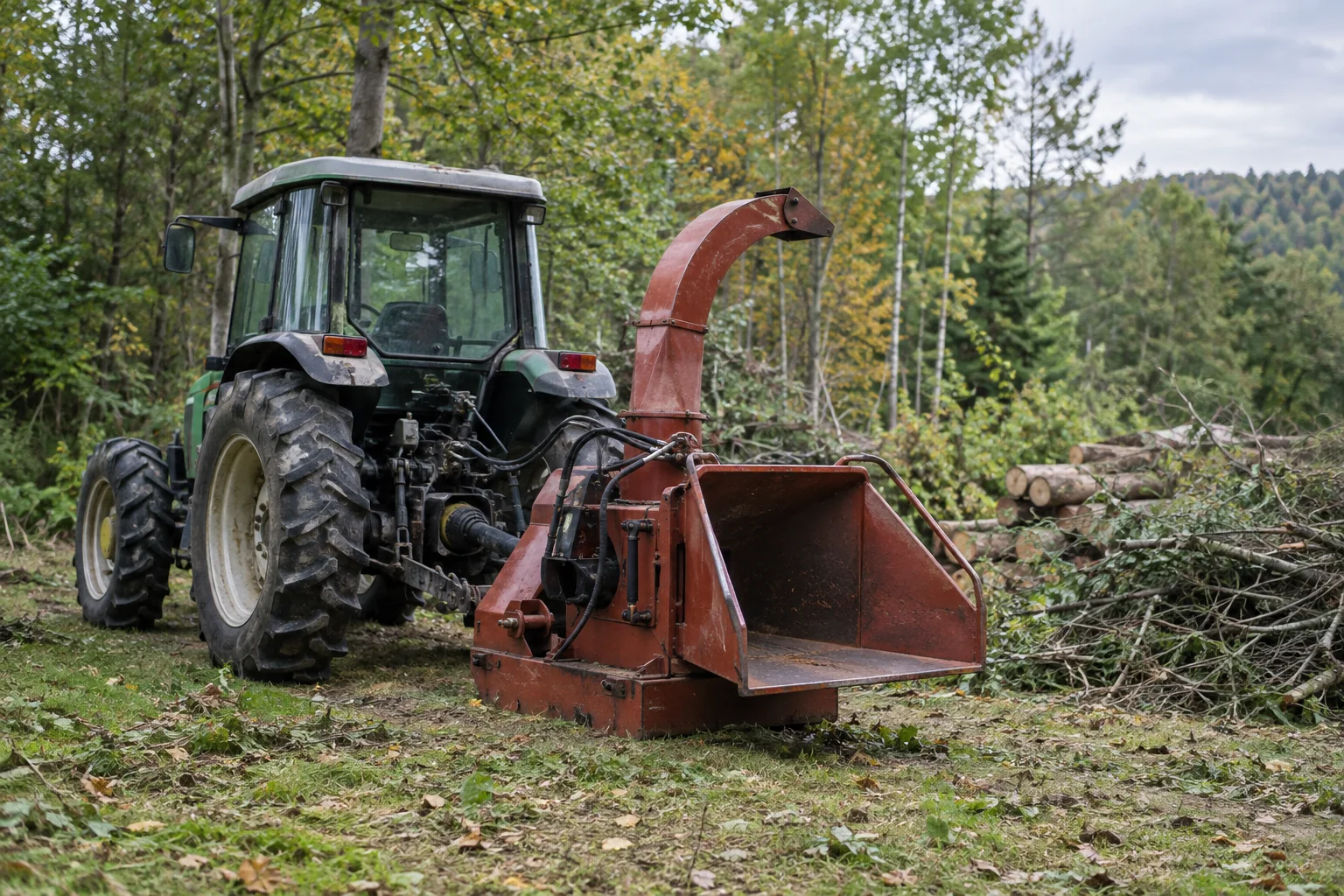
The WoodMaxx WM-8H belongs on the shortlist only if you already have a compatible tractor and recurring heavy brush work. WoodMaxx lists Category 1 or 2 three-point attachment, self-contained hydraulic infeed, adjustable rollers, and an 8-inch maximum. Crucially, WoodMaxx says 19 PTO horsepower handles about 4-inch hardwood or 6-inch softwood, while full 8-inch capacity requires 50 PTO horsepower. Its specifications also say "15 hp min. required," so prospective buyers should ask WoodMaxx to confirm compatibility for their exact tractor and material before ordering.
Key facts
- Power: Tractor PTO plus a self-contained hydraulic system for infeed; no tractor hydraulic hookups required for the rollers.
- Rated branch diameter: Up to 8 in. at sufficient PTO horsepower; WoodMaxx gives smaller wood-size examples at 19 PTO hp.
- Other material: Built for branches and brush, with no dedicated leaf-shredder chute listed.
- Feed: Adjustable dual hydraulic infeed rollers, with control bar.
- Setup: Category 1 or 2 hitch; WoodMaxx lists seven gallons of ISO-46 hydraulic fluid as required and 990 lb. shipping weight.
- Warranty: Three-year parts warranty stated in its specifications.
- Price: $4,095 direct at the listed price check, excluding setup consumables and any tractor costs.
Why it ranks here: Controlled powered infeed can suit repeated brush processing, but a nominal 8-inch rating without the required PTO horsepower is misleading. Best for: Wooded-property owners with a compatible tractor and the ability to store and maintain the attachment. Limitations: High purchase and setup cost, tractor dependency, hydraulic maintenance, substantial handling demands, and the manufacturer's differing minimum-HP statements. Verdict: Verify tractor fit and expected hardwood diameter in writing; otherwise rent a brush chipper sized to the job.
How to size a chipper for real work
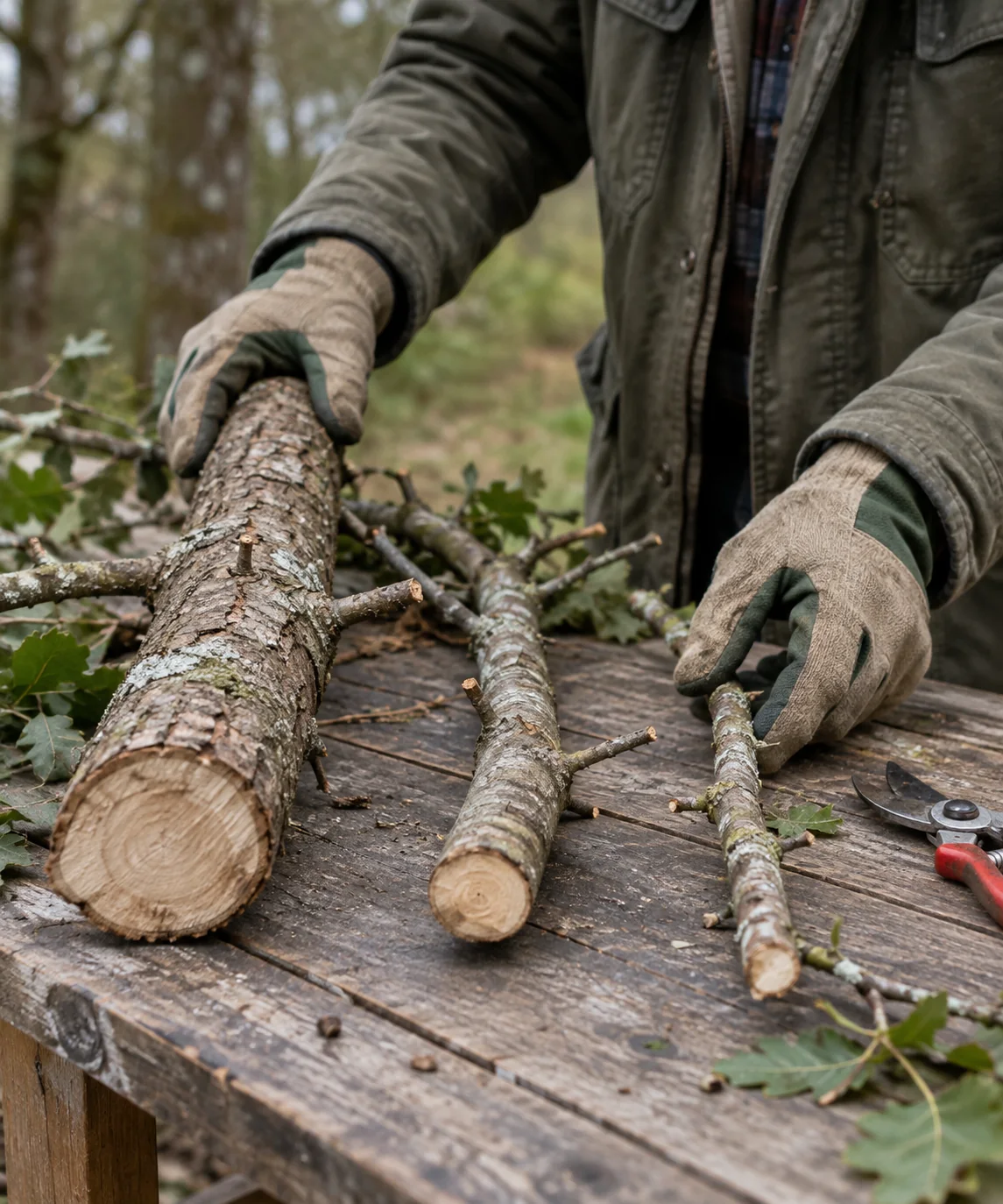
Start with a representative pile, not the largest branch on the property. Sort material into straight woody branches, forked brush, leaves and soft stems, and logs or trunks. Measure the thick cut ends of branches you will actually chip, then note how many loads sit near a machine's maximum. A diameter rating sets a claimed upper bound; it is not a tested promise for every species, moisture condition, blade condition, branch shape, or feed rate. WoodMaxx's different hardwood and softwood examples at 19 PTO hp are a concrete illustration of why nominal capacity can overstate practical fit.
Match the inlet to the material. A chipper chute handles woody branches; a dedicated shredder hopper handles leaves and smaller soft growth where the manufacturer allows them. Champion explicitly specifies separate 3-inch chipper and 1/2-inch shredder capacities. Neither number means that a 3-inch branch belongs in the leaf hopper or that a thick mass of wet leaves can be fed into every branch-only chipper.
Understand the feed system before paying for capacity. Gravity-feed and manually fed machines demand more handling and trimming of forked pieces. DR describes a self-feeding cutting action; WoodMaxx explicitly has powered hydraulic rollers with adjustable feed speed. These systems differ, and their names alone do not quantify hourly output. If throughput is decisive, request a demonstration using wood like yours or rent a comparable machine first.
Buy, rent, or hire a crew?
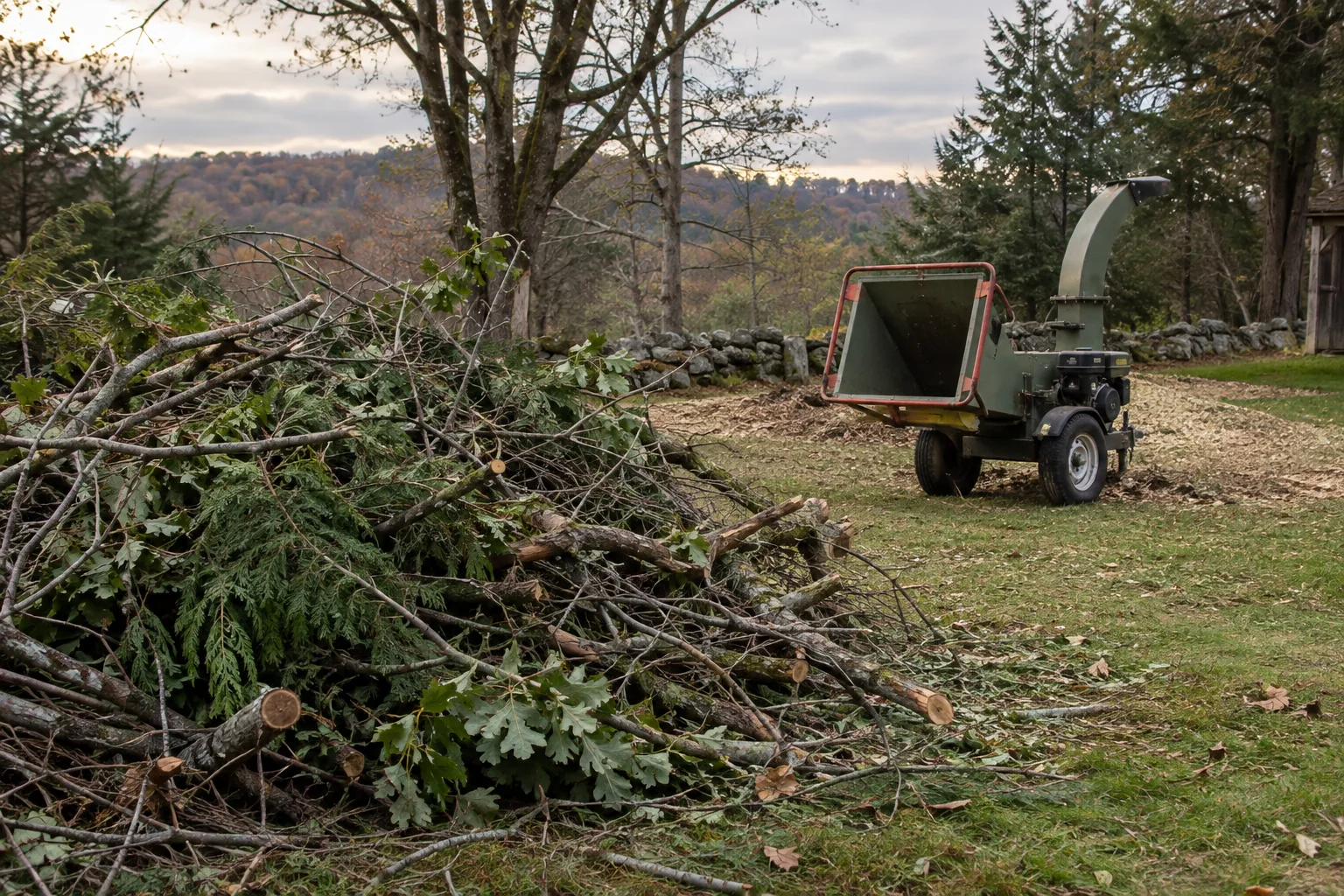
Buy when pruning and brush piles return often enough to justify storage, maintenance, and practice. Compare the purchase price with replacement blades, fuel or electricity, engine or hydraulic service, transport, and your time. No universal "rent after X uses" threshold is defensible without local quotes and the number of hours you need.
Rent when the pile is concentrated into a day or weekend, particularly if much of it exceeds small homeowner-machine capacities. United Rentals lists a 6-inch brush-chipper class with automatic feed and names Vermeer BC700XL and Bandit 65XP as possible models; its page does not supply a universally applicable rental price. Get a local quote including delivery, transport requirements, any damage or cleaning fees, and operating instruction.
Hire a qualified tree-service crew if the work also involves taking down trees, overhead branches, or large unstable limbs. Chipping is only one part of that job, and the equipment purchase does not solve the removal hazard.
Head-to-head decisions
WEN 41119 vs Champion 200946
Choose WEN for occasional light pruning and Champion for recurring mixed debris. WEN's 1.75-inch corded electric rating and $92.52 direct listing are appealing for a small pile; Champion's separate shredder chute and 3-inch chipper rating cover a broader material mix, with the work and upkeep of a gas engine. There is no head-to-head field test establishing either machine's actual hourly output.
Champion 200946 vs DR PREMIER 375
Choose Champion if leaves and soft brush are routine, and DR if nearly every pile consists of woody branches. Champion has two inlets and a 3-inch chipper rating; DR is a dedicated 3.75-inch-rated chipper described as self-feeding. The extra 0.75 inch of stated maximum alone does not prove DR is faster on smaller branches.
Patriot CSV-2515 vs WEN 41119
Choose Patriot only when large quantities of leaves and other soft yard waste make its separate hopper worth the expense. Patriot's $1,495 direct price and 2.5-inch branch rating are far above WEN's $92.52 and 1.75-inch figures at the listed price check. Those are manufacturer listings, not independent measures of value or performance.
WoodMaxx WM-8H vs a 6-inch rental
Choose rental for sporadic larger-diameter jobs and WoodMaxx for frequent work when a compatible tractor already exists. WoodMaxx lists a $4,095 purchase price plus tractor and setup requirements; a rental operator must obtain a local rate and account for transport and training. A rented 6-inch chipper is its own machine class, so compare the actual rental model and its manual rather than assuming every unit behaves alike.
Safety checks before you buy or rent
Read the exact model manual and learn its emergency controls before feeding material. NIOSH says safety devices should be checked before use, hands and feet kept out of the infeed, brush fed butt-end first, and the operator positioned according to that machine's instructions. Feed controls and guards reduce risk; they do not make it safe to reach into a running hopper. Stop the machine, isolate its power as instructed, and wait for all moving parts to stop before clearing a jam or opening a cover.
Check that the guards, feed controls, and supplied push tool are present and functional. Wear appropriate eye and hearing protection, secure loose clothing, keep bystanders clear, and follow the manufacturer's instructions for electrical supply or gasoline operation. For powered infeed equipment, NIOSH also recommends two trained workers in close contact. A rental counter should explain the particular machine's controls rather than handing over keys alone.
Buying checklist
- List the material mix: woody branches, leaves, soft brush, or all three.
- Measure typical and largest intended branch diameters; do not size the entire purchase to one exceptional limb.
- Ask what the manufacturer actually permits through each inlet, especially for green, wet, forked, or dry material.
- Confirm feed type, power, starting method, weight, storage space, and transport route.
- For PTO attachments, compare PTO horsepower, hitch category, driveline, tractor lift capacity, and material-specific capacity with the exact model manual and supplier.
- Confirm blade and part availability, warranty use class, and consumables.
- Compare checkout price and total ownership cost with a local rental or crew quote.
- Inspect guards and controls, obtain the manual, and arrange hands-on instruction for unfamiliar equipment.
Frequently asked questions
What size wood chipper do I need for a typical yard?
A small electric machine is a good starting point for occasional thin branches and a dual-inlet gas chipper-shredder when branches and leaves recur together. Measure the branches you actually intend to chip. WEN lists 1.75 inches for the 41119, while Champion lists 3 inches for the 200946's chipper chute. These are manufacturer maximums, not universal everyday working diameters.
Can a 3-inch chipper continuously process 3-inch hardwood?
A 3-inch rating by itself cannot answer that. Species, shape, moisture, blade condition, engine power, and feed design matter, and we found no standardized independent throughput test for the machines ranked here. Treat the stated diameter as the manufacturer's upper limit and request a material-relevant demonstration if your workload lives at that limit.
Is a chipper the same as a chipper-shredder?
No. A dedicated chipper is primarily for woody branches; a chipper-shredder adds a separate way to process finer vegetation when its manual permits it. Champion explicitly assigns branches and leaves to different chutes, while DR sells the PREMIER 375 as a dedicated branch chipper.
Is electric or gas better for a homeowner?
Electric fits smaller, outlet-accessible cleanup; gas makes sense when branch size, work area, or mixed debris exceeds the practical fit of a small corded machine. A motor's amp rating and an engine's horsepower are different specifications and do not, on their own, establish comparative chipping speed. Check branch size, feed design, outlet location, and maintenance needs first.
Does an 8-inch PTO chipper work with any compact tractor?
No. WoodMaxx says the WM-8H needs a compatible Category 1 or 2 three-point hitch and substantially more PTO horsepower for full 8-inch material than for smaller branches. Its page mentions both a 15 HP minimum in the spec list and 19 PTO HP in the product summary, so confirm exact tractor compatibility directly before buying.
Should I buy or rent for a single storm-damage pile?
Price a rental or professional cleanup first. United Rentals offers a 6-inch brush-chipper class, but the machine, local rate, delivery, and training depend on the rental arrangement. Compare the full job cost with the purchase price and ongoing maintenance before committing.
Final recommendation
For recurring mixed yard waste, we choose Champion 200946; for occasional small branches, WEN 41119; for repeated woody branches without a tractor, DR PREMIER 375. Patriot CSV-2515 serves a narrower leaf-heavy electric use case, and WoodMaxx WM-8H only makes sense with a compatible tractor and frequent heavy work. A large one-off pile is a rental or service decision first. Confirm current prices, exact model manuals, and the actual branches you expect to process before buying.